ServicesFillings
Children's Fillings in Mansfield Center
When a cavity is caught early, a filling stops it and keeps your child's tooth in working order. We use tooth-colored materials, numb gently and explain which teeth need care, and why, in writing before we start.
What a Filling Does for a Young Tooth
A cavity is a small area where decay has softened the enamel and started into the layer beneath. It will not heal on its own. Left alone, it grows toward the nerve, and a tooth that could have taken a simple filling may later need a pulp treatment or a crown.
Baby teeth matter more than many parents expect. They hold space for the adult teeth, help kids chew and speak clearly, and some back molars stay in place until around age 12. Enamel on baby teeth is also thinner than on adult teeth, so decay moves through it faster.
A filling removes the soft, decayed part and seals the tooth with material that bonds to what remains. Done early, it is a short visit, and most kids go back to school or play the same day.
What Your Child's Filling Visit Includes
- A close look before anything else
- We confirm the cavity with an exam and, when needed, X-rays, so we know how deep it goes. Some very early spots can be watched or treated with fluoride instead of drilled, and we will tell you when that is the case.
- A written plan and estimate
- Before treatment, you receive the teeth involved, the material we recommend and what affects the cost, all on paper. If we find something different once we begin, we stop and talk with you first.
- Tooth-colored materials
- Most fillings are composite resin, shaded to match the tooth and placed in thin layers that harden firmly to it. For some baby teeth we may suggest glass ionomer, which releases fluoride slowly and suits teeth that will fall out in a few years.
- Gentle numbing
- We start with a flavored numbing gel, then give local anesthetic slowly while keeping your child talking or distracted. We explain each step in kid-friendly words so nothing comes as a surprise.
- Polish and bite check
- We shape the filling to the tooth's natural grooves, check how your child bites and polish the surface smooth. A well-finished filling is easier to keep clean and less likely to collect new plaque.
Signs Your Child May Need a Filling
Sensitivity to sweets or cold
A wince with ice cream, juice or a cold drink can mean decay has reached past the enamel.
White, brown or dark spots
Chalky white patches near the gumline are often the first sign of weakened enamel. Brown or gray areas in the grooves of back teeth can be decay that is already established.
Floss that frays in one spot
When floss keeps tearing, or bits of food lodge in the same gap after every meal, a cavity may be forming where two molars touch. That area is hard to see without an X-ray.
Changes at the dinner table
Young children seldom put tooth pain into words. Watch for a meal moved to one side of the mouth, slower eating or a sudden refusal of foods they used to enjoy.
A visible hole or chip
A pit you can see or feel with a tongue usually means the decay has been there a while and should be seen soon.
What Shapes the Cost of a Filling
No two mouths are alike, so we price a filling plan only after we have seen the teeth and X-rays. Before we begin, you get that estimate on paper with each item listed separately. For payment, MasterCard, Visa and Discover are all welcome, we work with most insurance plans, and the CareCredit Patient Payment Plan is another option. We are happy to walk you through what your plan usually covers.
Number of surfaces
A small cavity on one surface takes less work than decay that has spread across two or three sides of a molar.
Material chosen
Composite and glass ionomer are priced differently. The better fit depends on the tooth, your child's age and how many years the filling needs to last.
How deep the decay goes
When decay sits close to the nerve, a filling may not hold up. A pulp treatment, described on our Root Canals page, or a crown may serve the tooth better, and we explain why before the plan changes.
Comfort support
Plenty of kids do fine with numbing alone. Others need extra help to stay calm, and the options on our Sedation Dentistry page are added to the plan when used.
Insurance details
Plans differ, especially on tooth-colored fillings for back teeth. We share whatever we can confirm so your portion is clear before the visit.
How the Appointment Goes
- 1
Talk it through
We review the written plan with you and answer questions. We also tell your child, in simple terms, what the tooth will feel like and how long it will take.
- 2
Numb and protect
After the gel and anesthetic, we place a small rubber shield or cotton rolls to keep the tooth dry, which helps the filling bond properly.
- 3
Clean out the decay
We remove only the softened tooth structure and keep as much healthy enamel as we can. Kids hear a buzzing sound and feel some pressure, not pain.
- 4
Fill, shape and finish
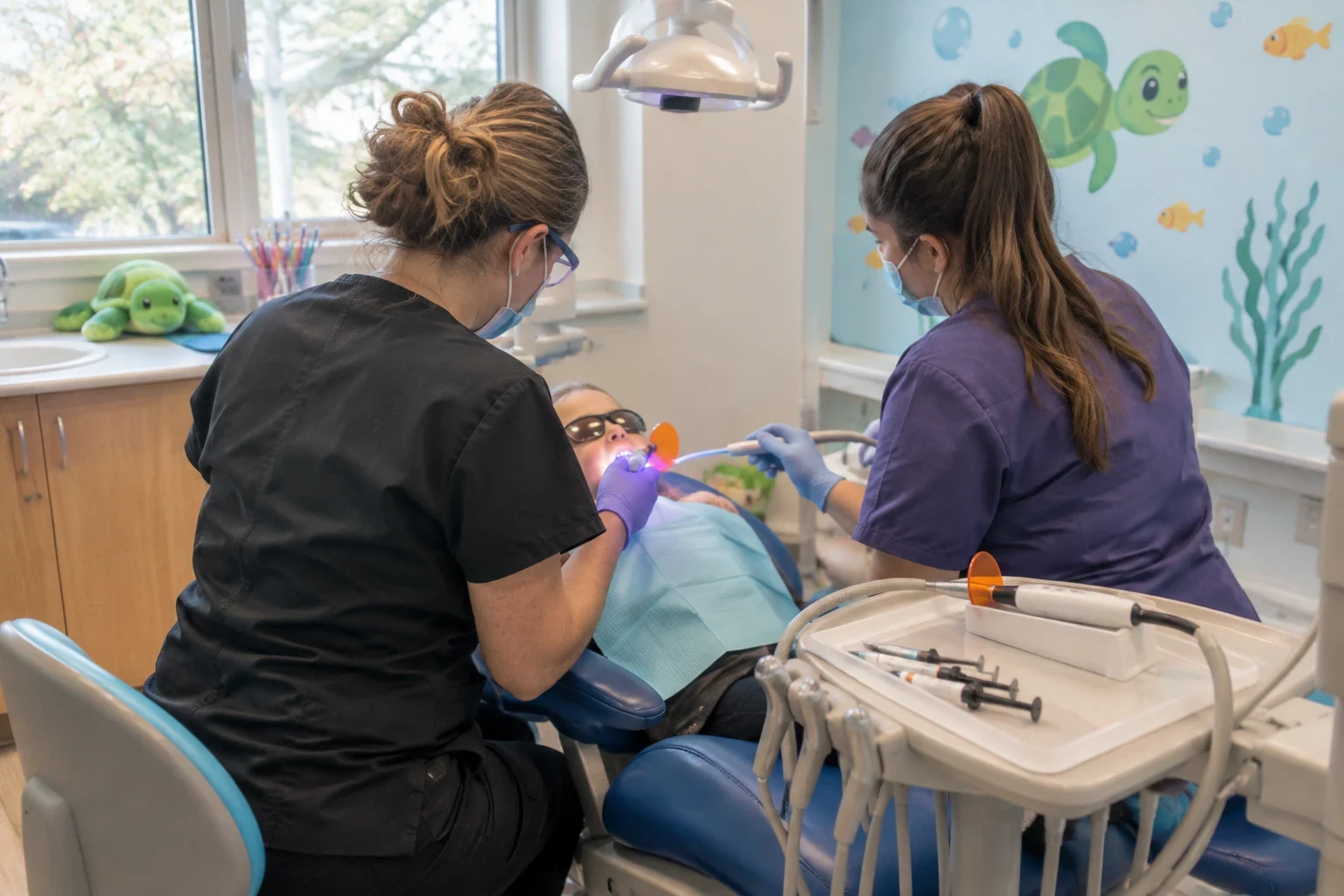
The material goes in, a blue light hardens composite in seconds, and we shape and polish it. Many single fillings take well under an hour.
- 5
Aftercare
Numbness lasts a few hours, so soft foods and no chewing on lips or cheeks until it wears off. We will tell you what to watch for and when to schedule a recheck with your child's next exam and cleaning.

Questions Parents Ask About Fillings
It's only a baby tooth. Does it really need a filling?
Untreated decay in a baby tooth can grow, become painful or infected, and reach the adult tooth developing underneath. Some baby molars stay put until around age 12, so that tooth may still have years of chewing ahead. Treating it now usually spares your child a bigger procedure later.
Will the shot hurt my child?
First we numb the gum with a flavored gel, then we give the anesthetic slowly. Most kids notice a small pinch or some pressure at most. We keep talking with your child throughout and pause whenever they need a moment.
Can I stay with my child during the filling?
Many parents do, particularly for a first filling. When you call to set up the appointment, we will talk about what helps your child feel most comfortable.
How long do tooth-colored fillings last?
That depends on how large the filling is, which material we use and how well the area is brushed and flossed. Glass ionomer is often the pick for baby teeth that will be lost sooner. We look at every filling during regular exams so any wear shows up early.
Is there a way to avoid more fillings down the road?
Often there is. Sealants cover the deep grooves of back molars, and fluoride treatment helps harden enamel. We can recommend which of these suits your child during the same visit.
Have a Tooth Checked Before It Grows
If you have noticed a spot, sensitivity or a change in how your child chews, we can take a look and give you a written plan. Families from Mansfield, Easton, Norton and nearby towns come to us for gentle fillings.