ServicesRoot Canals
Root Canals for Kids in Mansfield Center
When decay or a fall reaches the nerve of a tooth, a root canal can save it and end the ache. We treat baby and permanent teeth gently, and we explain the plan and its cost in writing before your child's treatment starts.
Saving a tooth that still has work to do
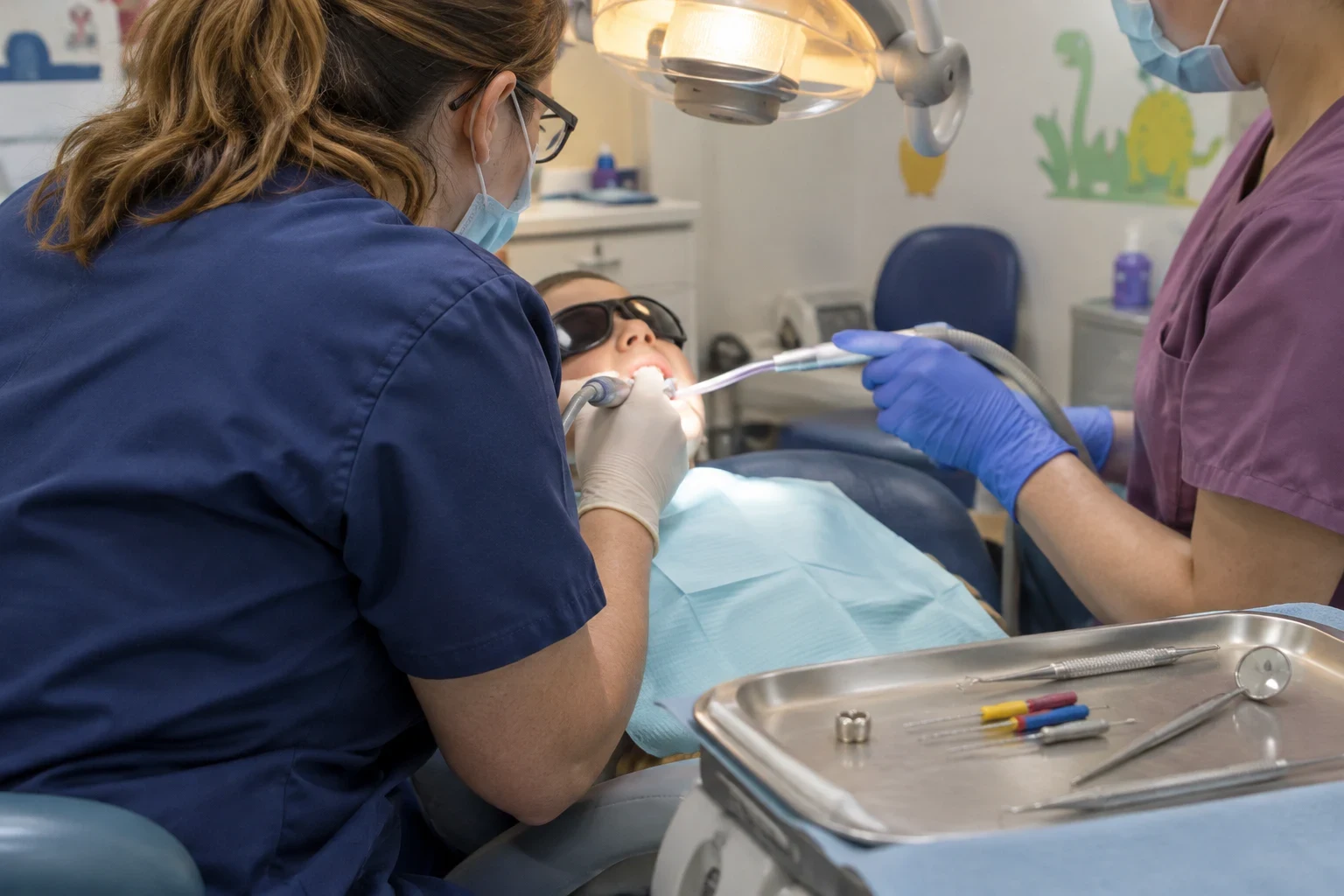
A root canal treats the soft pulp inside a tooth once decay or an injury has reached the nerve. For kids, that usually means one of two treatments. On a baby tooth we often do a pulpotomy, which removes the infected pulp from the crown of the tooth and leaves healthy root tissue in place. If the infection runs deeper, a pulpectomy cleans the roots as well. On a permanent tooth, the work is closer to the root canal most adults know.
Baby molars usually stay in place until about age 10 to 12. Keeping one healthy holds space for the adult tooth growing underneath, keeps chewing comfortable and can spare your child the space maintainer an early extraction often requires.
Before anything begins, we show you the X-rays, explain which treatment fits and put the scope and pricing factors in writing. You decide with the full picture, and nothing is added once your child is in the chair.
What root canal care includes
- X-rays and a pulp check
- We take digital X-rays and test how the tooth responds. That tells us how far the problem has spread and whether the tooth can be saved at all.
- Gentle numbing
- We use a topical gel first, then local anesthetic given slowly. We tell your child what they will feel in simple, honest words.
- Pulp treatment
- We remove the infected pulp, clean the space and place a medicated material that keeps the remaining tissue calm. For permanent teeth, the canals are shaped and sealed with a filling material made for roots.
- A protective crown
- Baby teeth treated this way are fragile, so most need a stainless steel or tooth-colored crown to hold up to chewing. Our Pediatric Crowns page explains the options.
- A follow-up look
- At later checkups we X-ray the tooth to confirm it is healing and the adult tooth below is developing normally.
Signs your child may need a root canal
Toothache at bedtime
Pain that starts without a trigger, often when your child lies down at night, usually points to an inflamed nerve rather than simple sensitivity.
Hot or cold pain that lingers
A quick twinge that passes in a moment is common. When the ache stays long after a cold drink or warm soup, the tooth should be checked.
A small bump on the gum
A pimple-like spot beside a tooth can be infection draining from the root. Call us promptly, and seek care right away if swelling reaches the face or your child runs a fever.
A front tooth changing color
When a tooth turns gray or yellow in the weeks after a knock, the nerve inside may be injured. Kids often report no pain at all, so the color change is the clue to watch.
Decay found near the nerve
At a routine checkup, X-rays sometimes show a cavity that has nearly reached the pulp before any discomfort begins. Catching it at that stage usually makes treatment simpler.
What shapes the cost
Before we begin, you get a written plan that lists each part of the root canal and what drives its price, so nothing new appears on the bill afterward. The total depends on which tooth is involved and what it needs to stay strong. For payment, we take Visa, Discover and MasterCard, and we work with most insurance plans as well as the CareCredit Patient Payment Plan.
Baby tooth or permanent tooth
Treating the pulp of a baby tooth is usually a shorter, simpler procedure than a full root canal on an adult molar.
How many roots the tooth has
Front teeth generally have a single canal. Molars often have three or more, and each one adds time and material.
The crown
Stainless steel and tooth-colored crowns use different materials and are priced differently. Your plan shows both so you can compare.
Sedation, if chosen
Nitrous oxide or other sedation appears as its own line, and it is added only when you decide you want it.
Your insurance benefits
Plans cover these treatments in different ways. We go over what your benefits show for each step before any work starts.
How the visit goes
- 1
Exam and written plan
We examine the tooth, review the X-rays with you and give you a written plan covering the treatment, the crown and the pricing factors. Questions are welcome before you agree to anything.
- 2
Getting comfortable
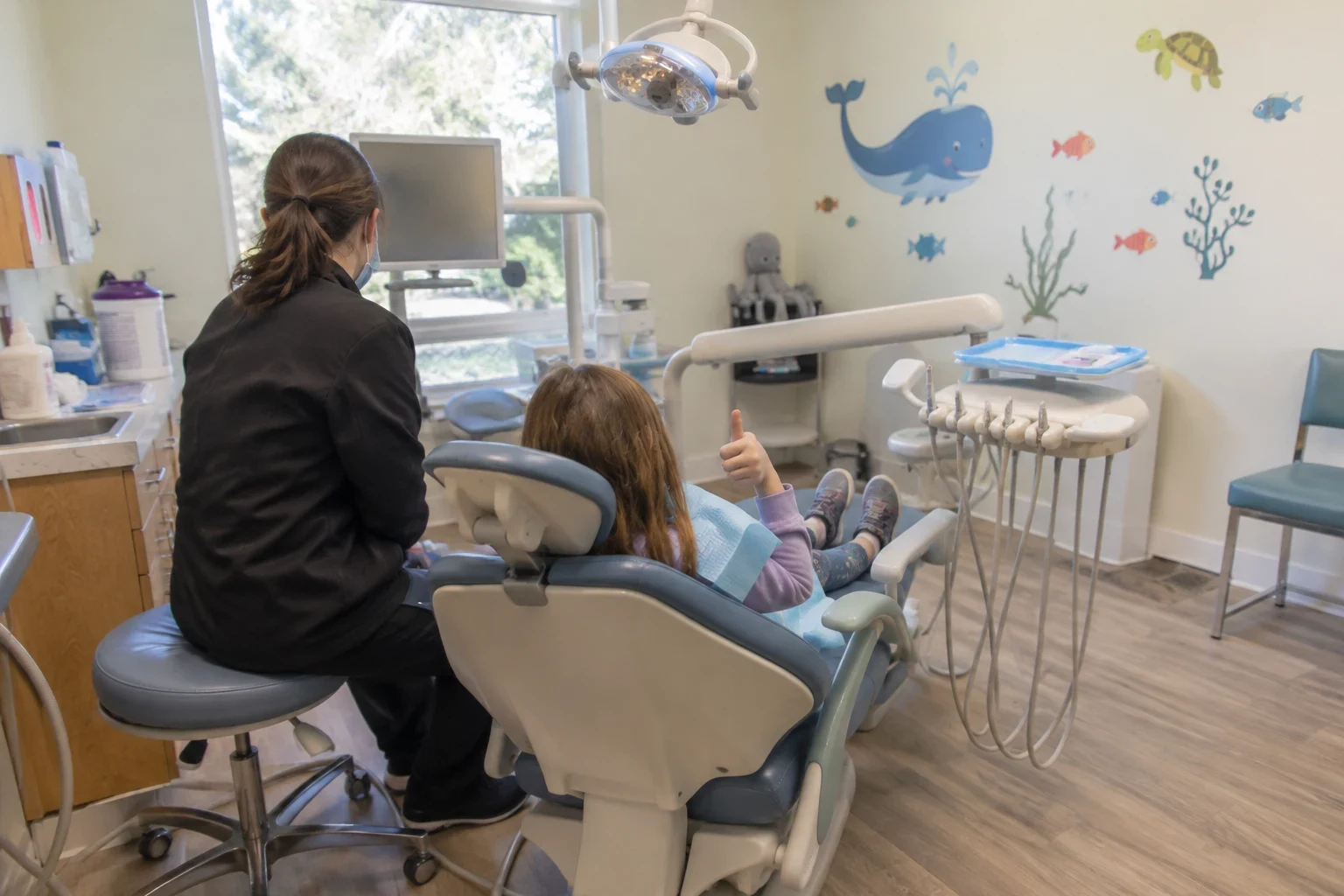
Your child can bring a comfort item and watch the ceiling or listen as we talk them through each step. If anxiety is high, we can discuss options from our Sedation Dentistry page ahead of time.
- 3
Treating the tooth
Once the tooth is numb, a small rubber shield keeps it dry and clean. A pulpotomy on a baby molar often takes well under an hour, while a permanent tooth may need longer or a second visit.
- 4
Crown and aftercare
We usually place the crown the same visit. You leave with written aftercare notes, including when your child can eat and what mild soreness to expect.

Root canal questions from parents
Does a root canal hurt my child?
We numb the tooth completely first, so most kids notice pressure rather than pain. Some soreness for a day or two afterward is normal and usually settles with the pain reliever your pediatrician suggests. Many children feel relief soon after, since the infection behind the ache has been removed.
Why not just pull the baby tooth?
There are times when removing the tooth is the better choice, and we will say so plainly. A baby molar with years of service left, though, guides the adult tooth into position. Losing it early can let neighboring teeth shift and may lead to a space maintainer.
Will my child need a crown afterward?
Most back teeth do. Once the pulp has been treated, the tooth is more prone to cracking, and a crown shields it until it falls out on schedule, or for many years on a permanent tooth.
How soon can my child have a snack?
Hold off until feeling returns to the lip and cheek, which typically takes a couple of hours. Chewing while still numb makes it easy to bite the inside of the mouth. Soft foods such as yogurt or pasta are the gentlest choice for that first evening.
How long will the treatment take?
Treating a baby tooth and placing its crown often happens in a single visit. A root canal on a permanent tooth can run longer, and your written plan will note the time we expect.
Have a sore tooth looked at
We see families from Mansfield Center, Easton, Norton and the surrounding towns. Register your child by phone and we will set up an exam and walk you through a written plan.