ServicesSealants
Dental Sealants in Mansfield Center
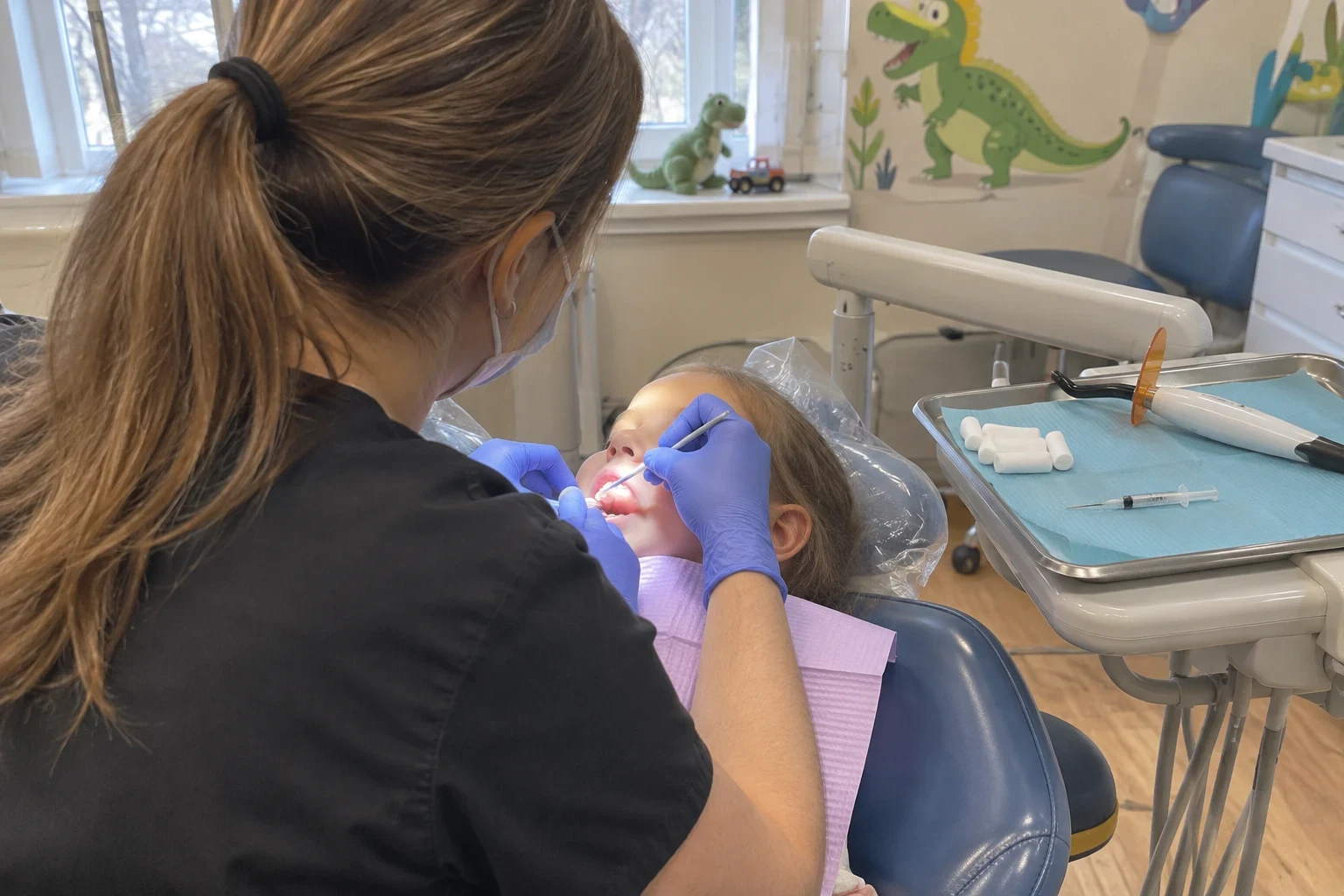
A sealant is a thin, tooth-colored layer that covers the deep chewing grooves on your child's molars, the spots a toothbrush tends to miss. No numbing and no drilling. Before anything starts, you receive a written note listing the teeth we plan to seal and the cost.
What sealants do for growing teeth
The chewing surfaces of molars are covered in pits and fissures, some narrower than a single toothbrush bristle. Food and bacteria settle into them, and that is where most cavities in kids begin. A sealant is a flowable resin that fills those grooves and hardens into a smooth surface that is far easier to keep clean.
The best time to seal a tooth is soon after it fully erupts, before decay has a chance to start. For most children that means the first permanent molars around age six and the second set around age twelve. We sometimes recommend sealing deep-grooved baby molars or premolars too, and we will tell you plainly when we think it is not needed.
Sealants work alongside good brushing, regular exams and cleanings, and fluoride treatment. They do not replace any of those, but they protect the one area that brushing alone struggles with.
What a sealant visit includes
A tooth-by-tooth check
We look at each molar for early soft spots or staining before sealing it. A tooth with active decay needs a different treatment, and we will show you what we see.
A written plan before we start
You receive a written list of the teeth we recommend sealing and the cost for each. Nothing is added once your child is in the chair.
Careful isolation and preparation
We keep the tooth completely dry with cotton rolls and gentle suction, because a sealant bonds well only to a clean, dry surface. This step matters more than any other for how long the sealant lasts.
Light-cured, tooth-colored resin
The material is painted on as a liquid and set with a soft blue curing light in a few seconds. Most sealants are clear or a faint white and are hard to spot once finished.
A bite check and polish
We have your child bite down and adjust any high spots so the tooth feels normal right away.
Signs your child may benefit from sealants
New permanent molars have come in
If you can see large back teeth behind the baby molars, it is a good time to ask. Fresh enamel is the most vulnerable to decay in its first years.
Deep or stained grooves
Dark lines in the chewing surfaces are often stain in deep fissures. They are a sign food is getting trapped there.
A history of cavities
Kids who have needed fillings in baby teeth often have the same risk in their permanent teeth. Sealing early can help break that pattern.
Brushing the back teeth is a struggle
Younger children, kids in braces and teens with busy schedules often miss the molars. A smooth sealed surface is more forgiving.
An older sealant looks worn
Sealants can chip or wear over time. If one looks rough or partly missing, we can check it and touch it up.
How the appointment goes
- 1
Clean the tooth
We brush the grooves clean with a gentle paste and rinse. Many families pair this with a routine cleaning to save a trip.
- 2
Condition the surface
A mild gel goes on for a few seconds to help the sealant grip the enamel, then we rinse it off and dry the tooth again. It has a sour taste, and we tell your child about it beforehand.
- 3
Paint and set the sealant
We flow the resin into the grooves and harden it with the curing light. Each tooth takes only a few minutes, and there are no shots involved.
- 4
Check and go
We check the bite and make sure the sealant is fully set. Your child can eat and drink normally as soon as they leave.
What affects the cost of sealants
Sealants are one of the simpler preventive treatments, yet the final total depends on details we can only confirm once we have looked at your child's teeth. Before any work begins, we write out which teeth we plan to seal and what each one costs, so you can decide with everything in front of you. For payment, families can use a Visa, Discover or MasterCard, the CareCredit Patient Payment Plan, or most insurance plans.
- How many teeth we seal
- Pricing is usually per tooth. Sealing the four first permanent molars is a smaller bill than sealing every back tooth in the mouth.
- A groove that has already started to soften
- If decay has begun inside a fissure, covering it with sealant would trap the problem rather than solve it. That tooth may need a filling first, or instead, and we show you the difference and the cost on paper before we do anything.
- What your plan covers
- Many plans pay for sealants on permanent molars, often with an age cutoff or a limit on how often a tooth can be redone. We go over your coverage with you so the written estimate matches what the plan will actually pay.
- Fixing an older sealant
- Patching a worn or chipped sealant is normally less work than placing a new one. Whether a plan covers that repair differs from one insurer to the next.
Questions parents ask about sealants
Something not covered here? (508) 682-5283
Does getting a sealant hurt?
No. There is no needle and no drilling, and the tooth is not numbed. Most kids say the hardest part is keeping their mouth open for a few minutes, and the sour taste of the conditioning gel.
How long do sealants last?
Sealants can last several years, though chewing on ice, hard candy or pens can wear them down sooner. We check them at every exam and touch them up when needed, which is why regular visits matter.
Are sealants safe for my child?
Sealants have been used for decades and are widely recommended for children. Some parents ask about BPA, and the trace exposure from a sealant is extremely small. We are glad to talk through the material we use before your child's appointment.
Can sealants go on baby teeth?
Sometimes. If a baby molar has deep grooves and your child is prone to cavities, sealing it can make sense because those teeth stay in place until around age ten to twelve. For many kids we focus on the permanent molars instead.
Will my child still need fluoride and cleanings?
Yes. Sealants protect the chewing surfaces only, while decay can also start between teeth and along the gums. Fluoride treatment, cleanings and good brushing at the sink each cover what the others cannot.
Protect those new molars early
Families from Mansfield Center and nearby towns such as Easton, Norton and Foxborough bring their kids to us for sealants and routine care. A short phone call sets up your child's records and a visit that fits your schedule.