ServicesFluoride Treatment
Fluoride Treatment for Kids in Mansfield Center
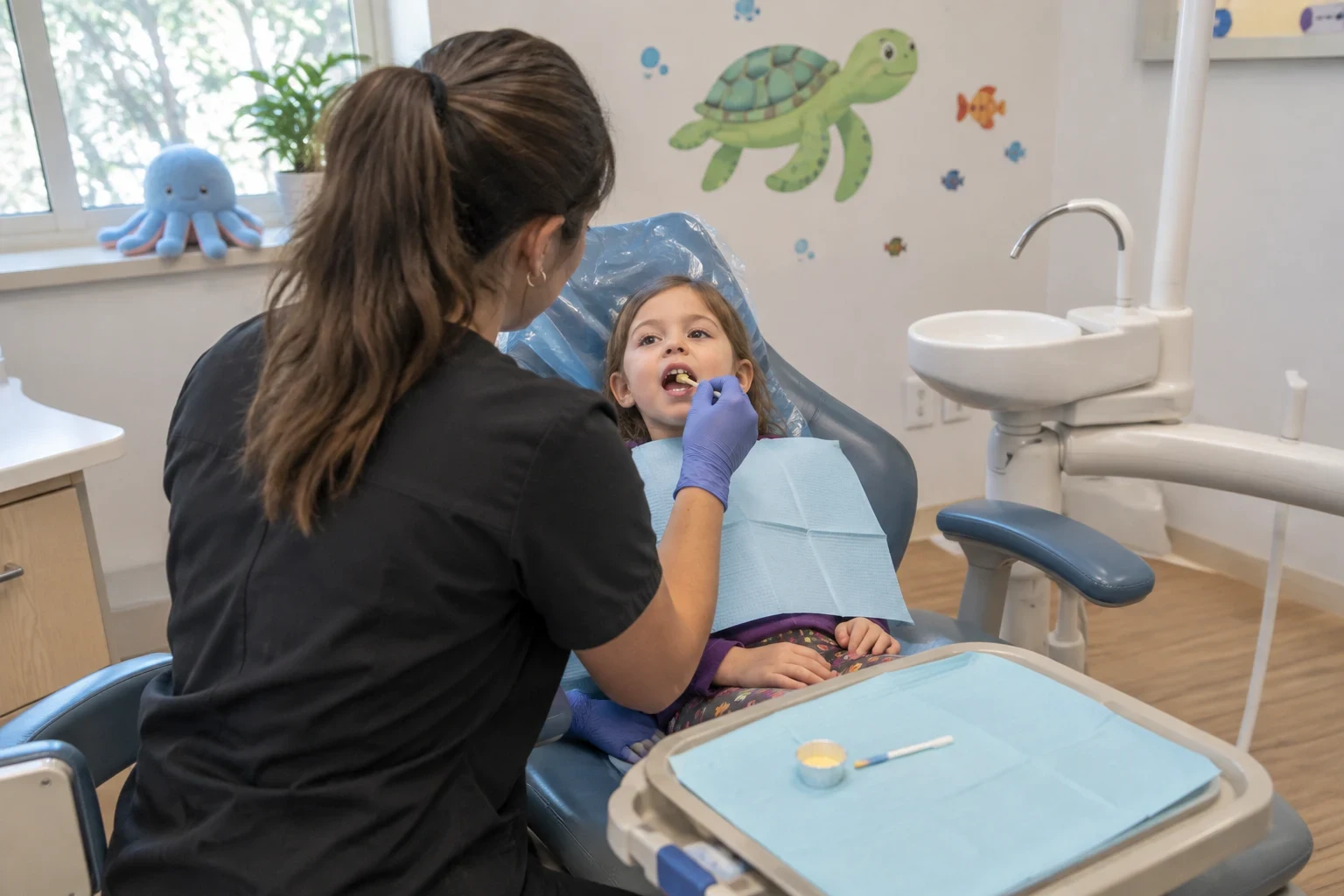
Fluoride varnish is one of the simplest things we can do for your child's teeth. We paint a thin, fast-setting coat onto clean enamel. It takes about a minute, with no needles and no drilling, and it helps soft spots harden before they become cavities.
What fluoride varnish does and who it helps
Enamel loses and regains minerals every day. Sugars and acids pull minerals out, and saliva puts them back. When the balance tips the wrong way, chalky white spots appear, and those spots are the earliest stage of a cavity. Fluoride helps enamel take minerals back in a harder, more acid-resistant form, so those early spots can firm up instead of breaking down.
Varnish holds fluoride against the teeth for hours, which is why it does more than toothpaste alone. It suits babies with their first teeth, toddlers who snack often, kids wearing appliances and teens with deep grooves or a history of fillings. Families in the area who drink from private wells, which usually carry little natural fluoride, often find it especially useful.
Before we apply it, we tell you what it is for, how often we suggest it for your child and what it will cost after insurance. You get that in writing, so nothing is added at the front desk that we did not talk about first.
What a fluoride treatment includes
- A clean surface first
- Varnish bonds best to clean, dry enamel. We usually apply it right after your child's cleaning, so plaque is already gone and the fluoride reaches the tooth itself.
- A thin, fast-setting coat
- We brush the varnish on with a small soft applicator. It sets the moment it touches saliva, so your child does not have to hold still with a tray in their mouth or avoid swallowing.
- A frequency matched to risk
- Most kids do well with varnish at each six-month visit. If we see white spots, frequent snacking or orthodontic brackets, we may suggest it every three months and explain why.
- Clear aftercare notes
- We tell you what to skip for the rest of the day and when to brush again. It is short, and we keep it simple enough to remember on the drive back.
- A written cost before we start
- You see the line item and what your plan is expected to cover before the varnish goes on. If you would rather skip it on a given visit, that is your call.
When your child may benefit from more fluoride
Chalky white spots
Flat, dull white patches along the gumline, often on the upper front teeth, usually mean enamel is losing minerals. At this early point they can sometimes be reversed.
Grazing and sipping all day
Crackers, fruit snacks and juice in a sippy cup bathe the teeth in acid for hours at a time. Varnish gives the enamel extra support between brushings.
A recent cavity or filling
Kids who have had one cavity are at higher risk for the next. Additional fluoride is an easy way to guard the teeth that are still sound.
Braces or a space maintainer
Wires, brackets and metal bands create corners where plaque collects and a toothbrush struggles to reach. Children wearing an appliance often do better with treatment more often.
Low-fluoride drinking water
Private well water and a lot of bottled water contain very little fluoride. Let us know what your family drinks, and we will take it into account.
What moves the price of a fluoride treatment
Varnish sits at the low end of what we charge for, and children's dental plans often pay for it. Your share comes down to a few plan details and how the visit is scheduled. We write those out before the appointment so the total at checkout is the one you already saw. At the front desk you can pay with Visa, MasterCard or Discover, use most insurance plans, or spread the cost through the CareCredit Patient Payment Plan.
How often your plan pays
Most plans cap fluoride at a fixed number of applications each year. When we think your child needs it more often than that, we tell you the out-of-pocket amount for the extra applications before scheduling them.
Where your plan's age cutoff falls
Some policies drop fluoride coverage once a child reaches a certain age, frequently somewhere in the teen years. For older kids, we confirm this first so the recommendation comes with an accurate number.
Part of a checkup or a separate visit
When varnish goes on during a routine cleaning, the varnish is the only added charge. Kids on a three-month schedule sometimes come in for fluoride by itself, and that visit may also carry a brief exam, which we list ahead of time.
How the visit goes
- 1
We look before we treat
During the exam we check the enamel for soft or white areas and ask about diet, brushing and water source. That tells us whether varnish fits and how often.
- 2
You see the plan and cost
We explain the recommendation in plain language and give you the cost in writing, including what insurance is expected to pay.
- 3
About a minute of painting
With the teeth clean and dried, we brush on the varnish. It has a mild flavor, and most kids are done before they notice.
- 4
Home with simple instructions
Your child can drink and eat soft foods soon after. Skip hot drinks, crunchy or sticky foods and brushing for the rest of the day, then brush normally the next morning.
What parents ask us about fluoride
How safe is varnish for a toddler or baby?
Very safe at the tiny dose a varnish contains. Because it firms up on contact with saliva, almost none of it gets swallowed, and that is the reason it is the preferred form for the youngest patients. We paint on only a thin layer and are glad to answer your questions before anything touches your child's teeth.
At what age can my child have fluoride for the first time?
As soon as teeth break through the gums. We frequently apply it at a baby's first visit, after we have checked those early teeth and talked with you about feeding and brushing routines.
Why do the teeth look slightly yellow after treatment?
Certain varnishes leave a light tint while they are still on the enamel. It does no harm and brushes off the following morning.
My child brushes with fluoride toothpaste. Does varnish add anything?
Yes. Toothpaste is gone within minutes of spitting and rinsing, while varnish keeps working on the enamel for hours. They complement each other. If your child is cavity-free with steady habits, we may recommend varnish less often and tell you so plainly.
When can my child eat again?
Cool drinks and soft foods are fine a short while afterward. For the rest of the day, steer clear of hot drinks and anything chewy, sticky or crunchy, because those can lift the varnish before it has done its job.
Is fluoride a substitute for sealants?
It is not. Fluoride hardens every enamel surface, while sealants form a physical cover over the deep grooves in back teeth that toothbrush bristles miss. Plenty of kids do well with both, and our Sealants page covers that treatment on its own.
Add fluoride to your child's next visit
We can apply varnish during a regular exam and cleaning, with the cost explained before we begin. Families from Mansfield, Easton, Norton and nearby towns can set up a visit with one phone call.