ServicesPediatric Crowns
Pediatric Crowns in Mansfield Center
When a cavity is too large for a filling, a small preformed crown can cover and protect the whole tooth. We fit crowns gently, in one visit, and give you the crown choice and the cost factors in writing before any work begins.
A full cover for a tooth that needs more than a filling
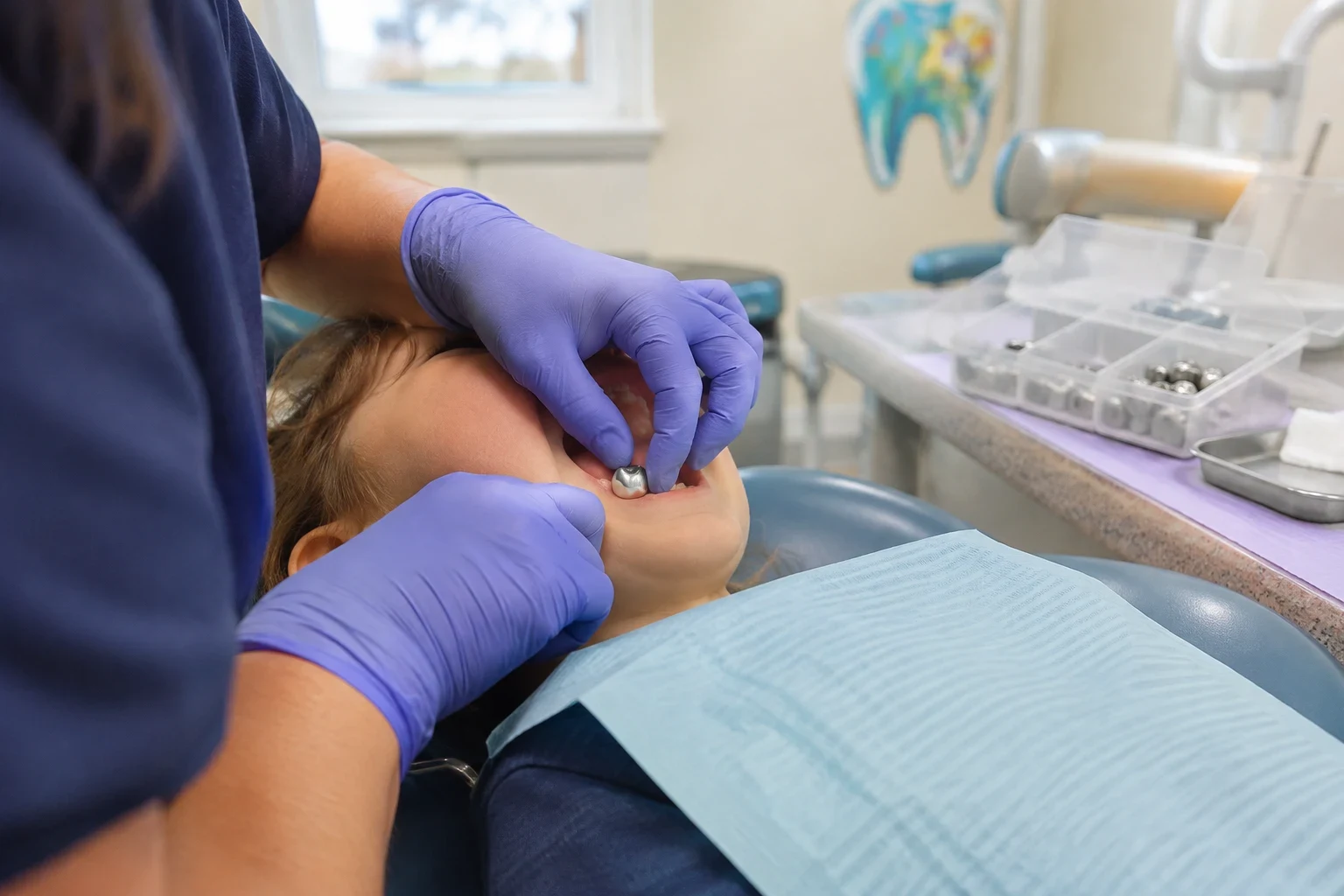
A pediatric crown is a cap shaped like a child's tooth that fits over what remains after decay is removed. Baby molars have thin enamel and large nerves, so a deep cavity can spread quickly. A filling in a tooth that weak may crack or leak. A crown wraps the entire tooth, keeps chewing pressure off the damaged part and seals out bacteria.
It matters because baby molars hold space for the adult teeth until about age 10 to 12. Losing one early can let neighboring teeth drift, which is why we often recommend a crown instead of an extraction. Before your child sits in the chair, you get a written plan that names the tooth, the crown material and what the visit will include.
What the crown visit covers
Exam and X-rays of the tooth
We check how deep the decay runs and whether it has reached the nerve. That finding tells us whether a crown on its own will do the job.
Stainless steel crowns for back teeth
These preformed silver crowns have long been the standard for baby molars. They are thin and strong, flex a little with the tooth, and seldom loosen before the tooth comes out naturally.
Tooth-colored crowns
For front teeth, or when parents would like a white finish, we go over zirconia and resin composite options. Each has its own strengths, and we explain how it wears and what it requires of the tooth beneath it.
Nerve treatment when needed
If decay has reached the pulp, a baby tooth pulp treatment is done first and the crown then protects the tooth. Our Root Canals page describes that step more fully.
Aftercare instructions
You go home with plain notes on eating, brushing around the crown and what normal tenderness looks like over the first day or two.

Signs your child's tooth may need a crown
- A large or dark cavity
- Brown or black patches spread across much of a molar usually mean the decay is too wide for a filling to hold.
- A broken or chipped molar
- A tooth weakened by decay can crack while kids chew. A crown rebuilds the shape and guards what remains.
- Pain with sweets or chewing
- Sensitivity that lingers can signal decay near the nerve. Your child may chew on one side only or start refusing certain foods.
- Repeat trouble with one filling
- When a tooth was filled before and that filling has since cracked or dropped out, it may be time to cover the whole tooth.
- Decay on several surfaces
- When a cavity runs between teeth and over the chewing surface, a crown tends to last longer than a patchwork of separate fillings.
How a crown appointment goes
- 1
Look and plan
We examine the tooth, take any X-rays it needs and talk through crown choices with you. The plan and its cost factors come to you in writing before the work is booked.
- 2
Keeping your child comfortable
We numb the area gently and tell your child what is happening in simple words. If your child is nervous or the visit will be long, our Sedation Dentistry page covers the choices we can discuss together.
- 3
Preparing and sizing
We clear away the decay, shape the tooth slightly and try preformed crowns until one sits snugly. Most pediatric crowns are placed at the same visit, with no lab work or temporary cap.
- 4
Cementing and checking the bite
The crown is cemented in place and we make sure your child bites evenly on both sides. Then we review aftercare with you before you leave.
What shapes the cost of a pediatric crown
Three things set the price: which tooth it is, the crown material, and whether the tooth needs other care before the crown goes on. Each one appears as its own line in your written plan, so the total you see before treatment is the total you pay for that scope. Payment can be made with MasterCard, Visa or Discover, and we work with most insurance plans as well as the CareCredit Patient Payment Plan.
- Crown material
- Stainless steel, zirconia and composite crowns use different materials and take different amounts of chair time to place. We lay out how each one wears so you can decide.
- Pulp treatment first
- When decay has reached the nerve, the pulp treatment is a separate step with its own line in the plan.
- How many teeth
- Crowning more than one tooth at a visit changes how long the appointment runs and what the total comes to.
- Sedation, if chosen
- If sedation suits your child, it is listed on its own and talked through with you ahead of the visit.
- Your insurance plan
- Coverage for crowns varies from plan to plan. We help you read what your plan lists, while your insurer makes the final call.
Crown questions from parents
- My child will lose this tooth anyway. Is a crown really worth it?
- Many baby molars stay in the mouth until around age 10 to 12. A decayed tooth left alone can lead to pain and infection, and pulling it early may let nearby teeth drift into the gap. The crown keeps that tooth chewing and holding space until it loosens on its own.
- What happens to the crown when the baby tooth comes out?
- It comes out with the tooth. The crown stays fixed to the baby tooth, and when the adult tooth pushes up underneath, both fall out together. There is no extra visit needed.
- Will my child feel pain during the crown visit?
- The tooth is numbed before we start, so most kids notice pressure instead of pain. The gum around the new crown can feel tender for a day or two, and soft foods with gentle brushing usually settle it.
- Is a white crown possible instead of a silver one?
- In many cases, yes. Tooth-colored crowns suit front teeth and some back teeth well. After looking at the tooth and how your child bites, we note in writing which options fit that tooth.
- How soon after the visit can my child eat?
- Wait until the numbness is gone so your child does not chew on a cheek or lip by accident. Regular meals are fine after that, though sticky candy and very chewy snacks are best skipped with any crown.
Talk with us about your child's tooth
Give us a call to register your child as a new patient and set up a visit. We will examine the tooth and walk you through a written plan before anything is done.